SnappMarket is an online grocery platform providing a wide range of assortment from fresh fruits and vegetables to beauty and wellness products. They are aimed at increasing the purchase power of customers by providing exceptional pricing and offerings while introducing a simpler and easier way to shop.
Introduction:
SnappMarket had been operating in the Iranian market for over two years, and due to its rapid growth, it realized that there was a need to improve its quality in order to provide users with better service.Then they contacted me for cooperation, which turned into 6 months of remote cooperation (as a contract).
My Role as the Senior product designer:
Define the problem and user needs
Research and benchmarking
Feature design
Create Hi-Fi prototype
User Interface and User Experience Design
Define Problem:
Due to SnappMarket's rapid growth and receiving thousands of orders each day, measuring user satisfaction with its orders became increasingly important & necessary, particularly when users were reporting growing dissatisfaction with delays in delivering orders.The need that this product was looking for became apparent after many meetings with managers:providing a Feature by which the user could rate his order delivery and provide feedback on the process.
Kick-Off & Design:
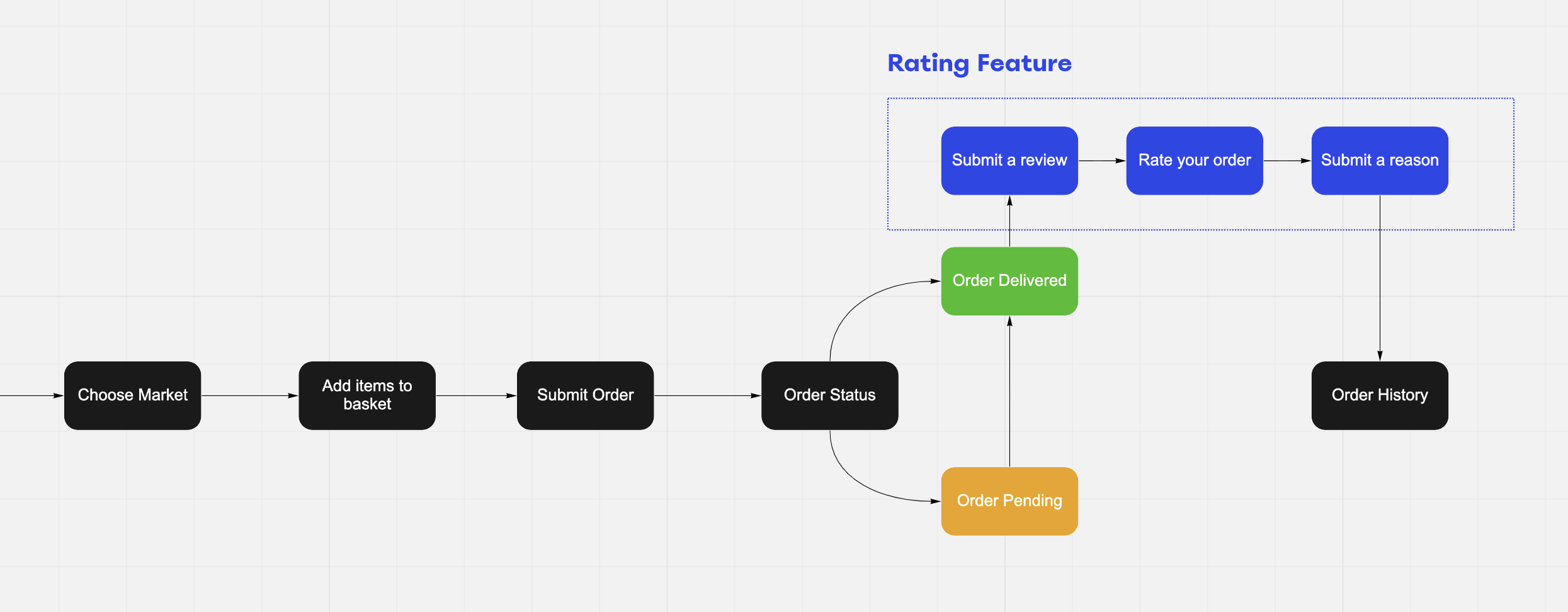
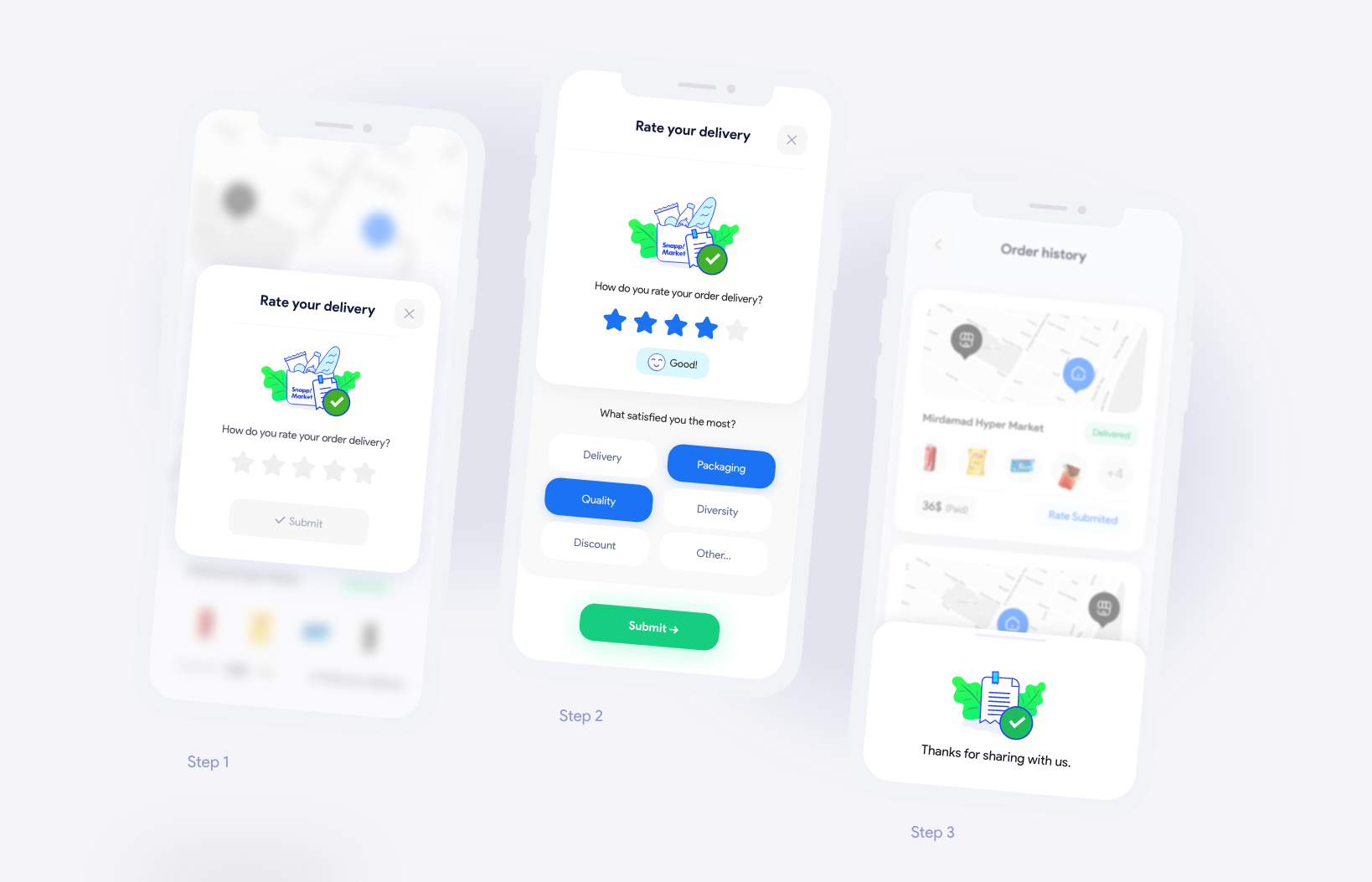
Considering the review of online ordering platforms, I determined that the best opportunity for obtaining customer feedback is when they receive their purchases from SnappMarket's courier.So, after the order is delivered by courier to the customer, the Rating feature must be enabled in the user's application. Like the flow below, which I drew it.
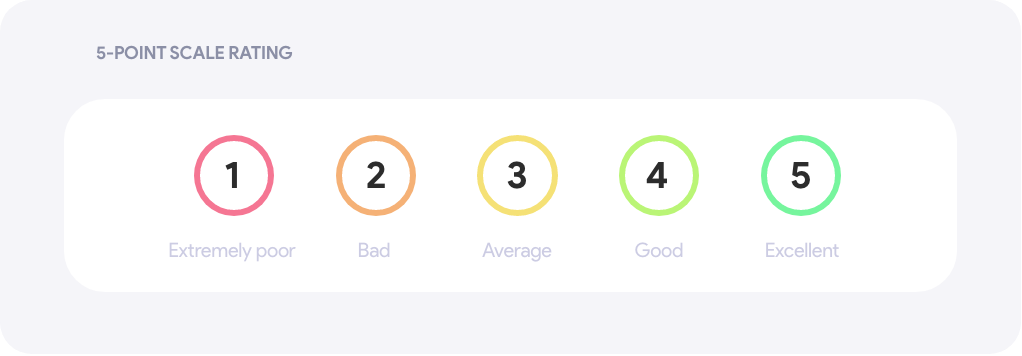
During my research, I found that one of the good rating methods to use on Snappmarket was the "5-point scale rating". The 5-point scale rating is used in many surveys, they are normally on a scale of 1-5. For this method, the minimum score for order rating is 1 and the maximum score is 5.
Also, in order to know the reasons behind the score the user gave to his order, I added tags so the user can select the reason for his score from the tags. (In the next few paragraphs, I'll discuss tags.)
Let's go to the Feature design:
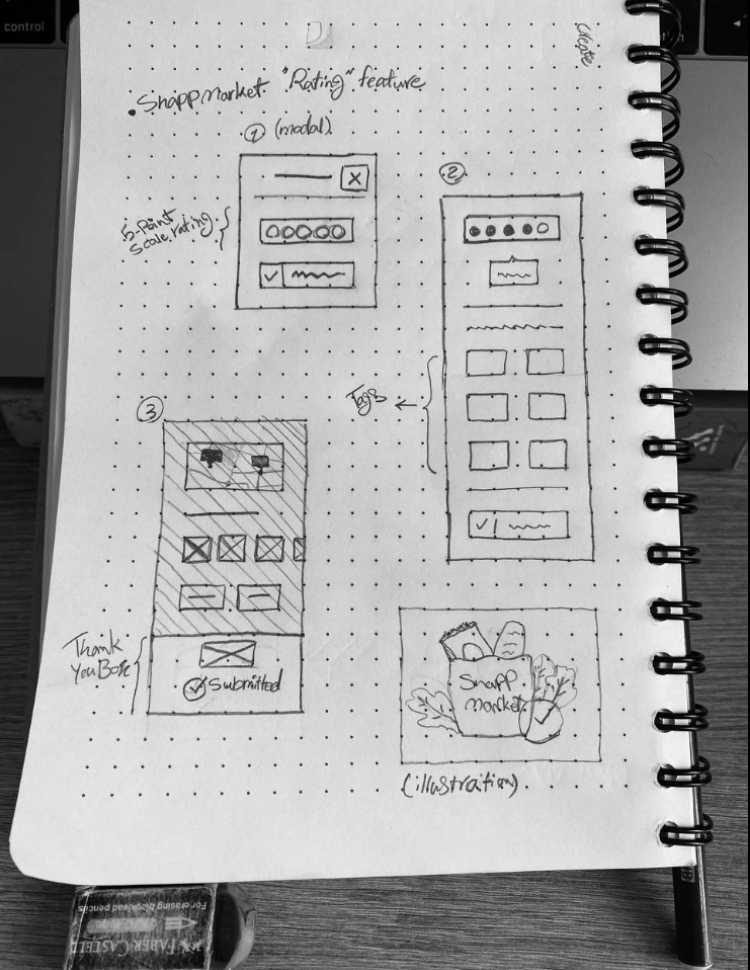
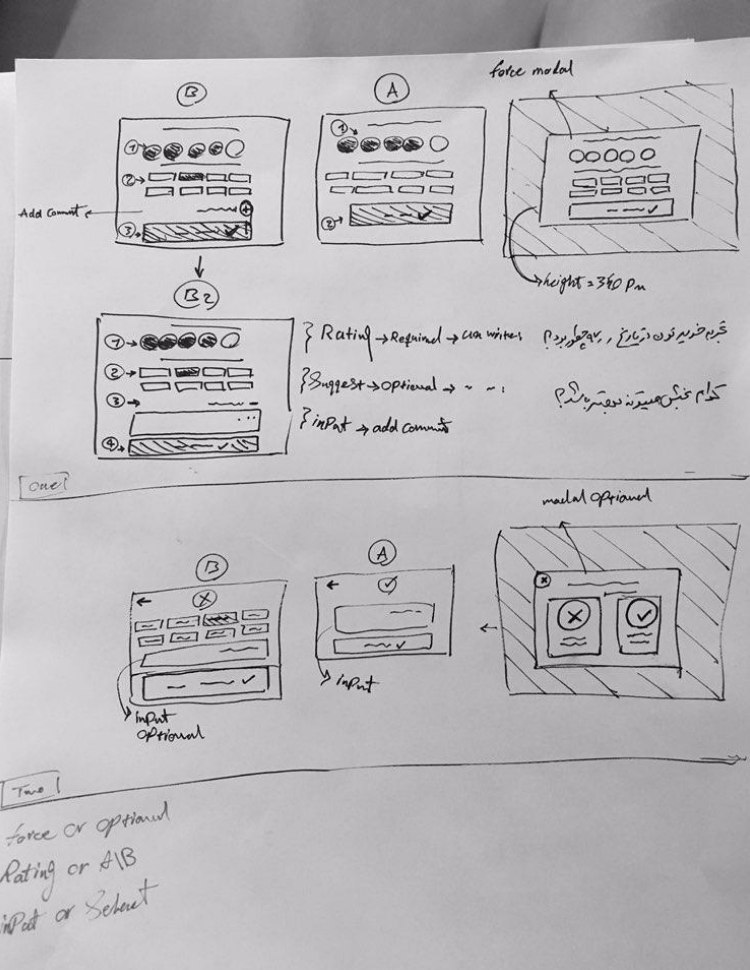
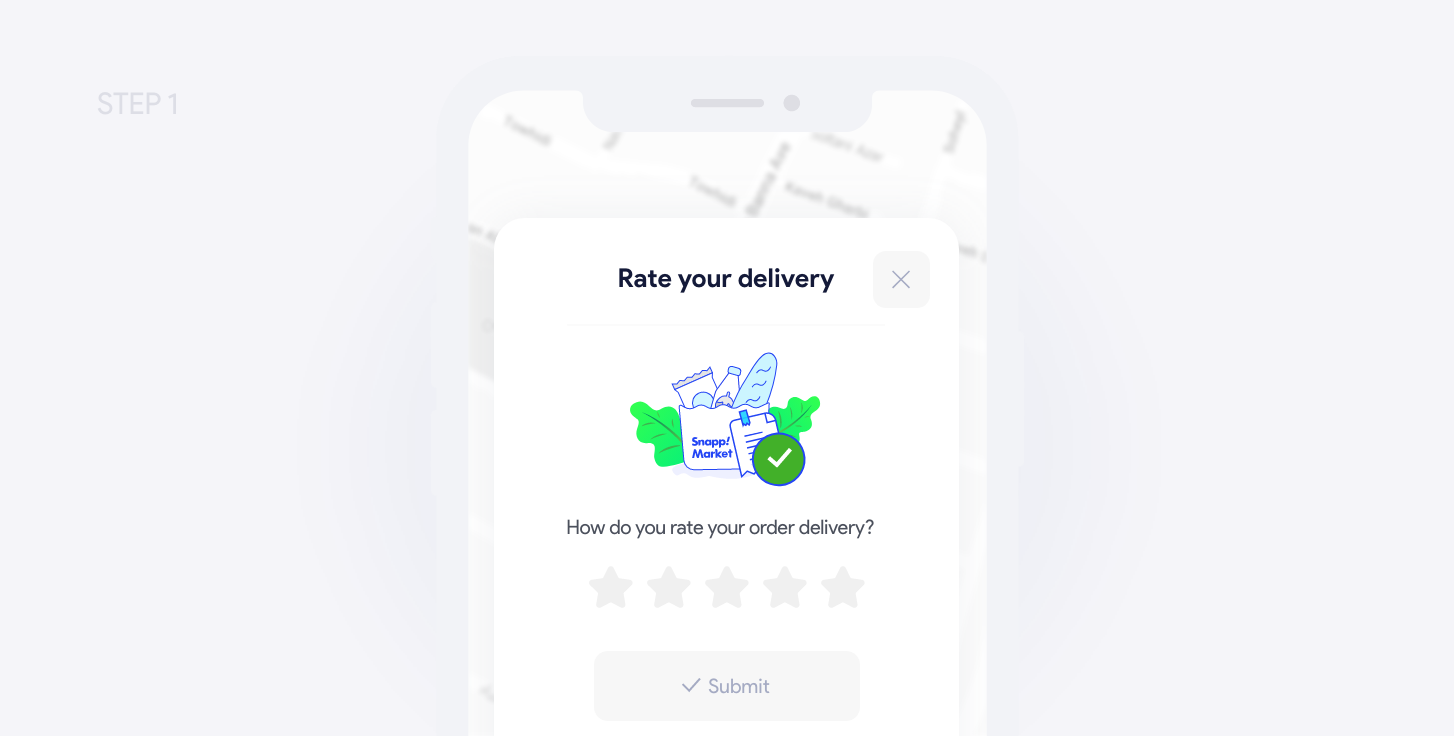
After conducting research, developing the idea, and identifying all the "Rating" feature modes, I began to design it for the mobile app. As I mentioned in my research process, I have used the 5-point scale rating method for this feature and have displayed 5 stars in front of the user so they can give a score from 1 to 5.
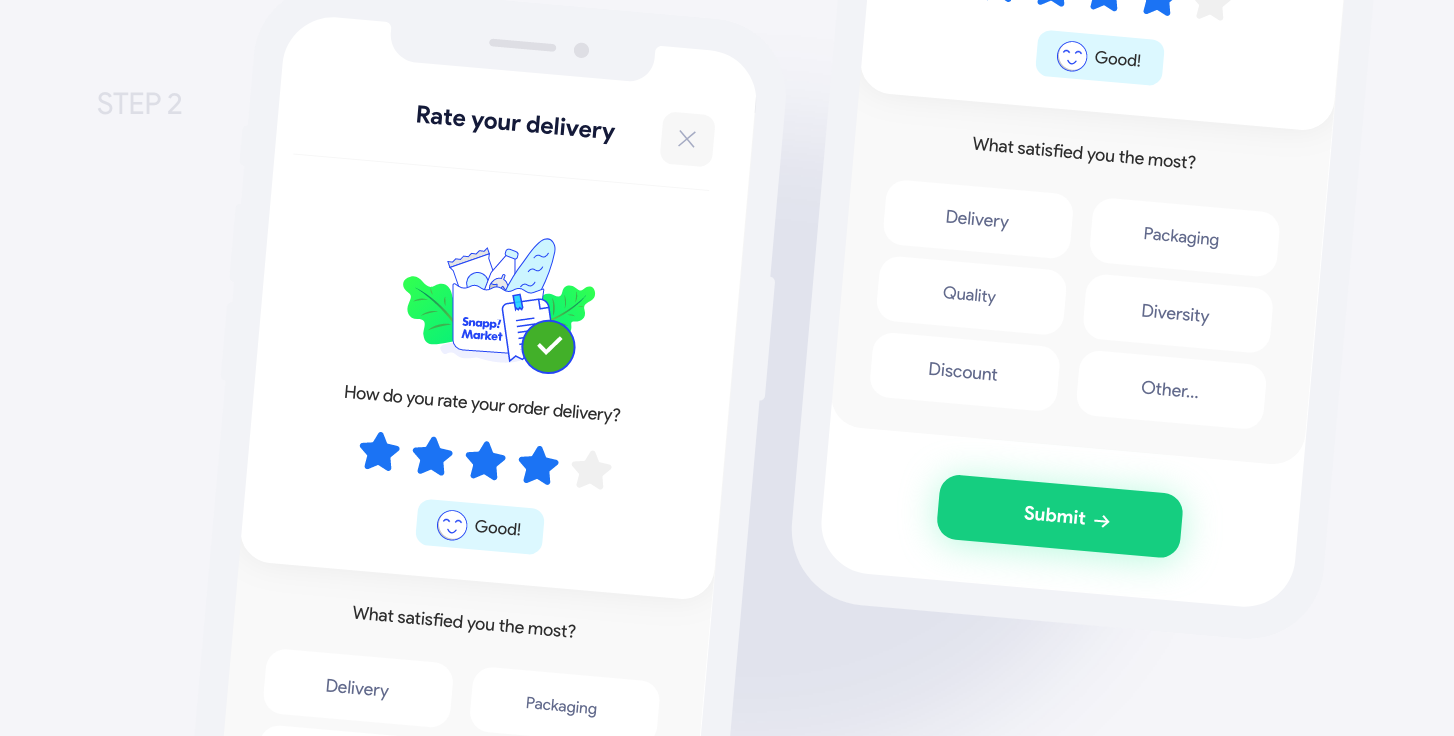
Once he has rated his order, the user is prompted to explain the reasons for his given score.If a user chooses a score of 1 to 3, the question they are asked is: What made you unsatisfied with the order? And then the user can choose from the list of negative tags to answer.Also, if a user gives a score of 4 or 5, again after selecting the score, the question they are asked is: What satisfied you the most? And then the user can choose one or more from the list of positive tags to answer.
In other words, the questions and tags that are placed in front of the user are customized completely based on the score that the user gives to his order.
I also designed a Hi-Fi prototype for this project in order to provide stakeholders with a clear picture of the Feature and ensure that it can be implemented smoothly by developers without my supervision. (video)
Well, Where do these tags come from?
During the research process, I asked Snapp Market customer support to provide me with the most common problems that users have reported in their calls so that I can review them to come up with some categories of common problems. I then added the categories as descriptive tags so that users would be able to choose one or more of them.Here are the 6 types of problems I categorized as descriptive tags:
After more than seven years of designing, improving, and optimizing digital products, I decided to seek new experiences and prepare myself for international challenges.
The launch of the DSP service was the most important project for the Aparat service in 2021 and 2022. It allows businesses and individuals to distribute their advertisements across the platform automatically.
"Teams" is a social network application for amateur football players. "Teams" enables people who wish to play football but do not have enough friends or teammates to form teams and attract similar players...
It's been a while since the launch of the service, and we were driving mass traffic to our landing page, where users who landed on the landing page were all directed there by clicking on the marketing's banner ads.
The better and more accurately we explain and introduce the DSP service to users on its landing page, the more customers we will add to this service, which is directly related to the increase in the revenue of Aparat.
It is well known that the notification system plays a vital role in enhancing user interaction and engagement rate with products. If I wanna deal with this project quickly, I must point out that "Aparat" did not utilize a proper notification system.
SnappMarket had been operating in the Iranian market for over two years, and due to its rapid growth, it realized that there was a need to improve its quality in order to provide users with better service...
Think of 404 as essentially a landing page. Then think about how much more work goes into a regular landing page than an error page. A well-designed 404 page can make a huge difference in how a user experiences a brand.